
What it Means to BE GOOD in Retail


If retail isn’t hard enough already - balancing margin pressures, rising expectations, and the ever-shifting sands of consumer sentiment - retailers now have an even bigger role to play. They are not just selling products. They are the custodians of their brand, their community, and their actions.
That sounds straightforward, but in practice it’s anything but. We’ve seen how easily brands can come unstuck by taking, or not taking, a stand. Some act meaningfully in alignment with their values, like the recent decision by Ben & Jerry’s co-founder to step away from the business over political differences. Others find themselves under fire for operational decisions that seem sound but carry ethical consequences, such as Westpac Australia’s return-to-office stance that ended in a legal and reputational tangle. And then there are those like Nala, whose unapologetic “It’s just a boob” billboard sparked a national conversation on body positivity and authenticity.
All these examples point to one truth: being good is no longer a nice-to-have. It’s a differentiator.
Ben & Jerry’s: When Purpose and Ownership Collide

In September 2025, Jerry Greenfield, co-founder of Ben & Jerry’s, publicly announced his departure after 47 years, saying he “could no longer, in good conscience, remain an employee.” His decision came from frustration that the brand’s social mission had been silenced under its parent company, Unilever. When the company was sold in 2000, the merger guaranteed independence to pursue its activist values. Greenfield says that promise has been broken.

The conflict peaked after Ben & Jerry’s withdrew from selling in Israeli-occupied West Bank territories, a decision consistent with its values but one that triggered corporate backlash. Greenfield and co-founder Ben Cohen have since called for the brand to be freed from Unilever ownership, even attempting to buy it back to restore its purpose. His exit coincided with claims that Unilever removed the brand’s CEO without board consent—seen as an attempt to curb activism.
The case highlights how easily mission drift can occur when governance, ownership, and values fall out of alignment. For retailers, it’s a reminder that doing good isn’t just about intent. It’s about protecting your brand’s moral independence as fiercely as you protect its market share.
Nala’s “It’s Just a Boob” Moment
In September 2025, a women’s health doctor flying business class with Virgin Australia was reportedly asked to leave the airport lounge to express breast milk. The airline later apologised, but Nala, an Australian lingerie brand, responded within 15 hours. A roaming billboard truck appeared outside the terminal reading: “It’s just a boob. It’s 2025. It’s time to get comfortable. Nala xx.”
The message was clear: Nala isn’t just selling bras. It’s selling inclusion, comfort, and confidence. The quick, pointed response elevated the brand from retailer to cultural commentator, taking a stand on a real issue with humour and heart.
While the campaign’s financial return isn’t public, its impact is evident—stronger brand differentiation, community loyalty, and national media coverage. It showed that when values and action align, authenticity becomes a competitive weapon.

Ethical Clothing Australia: Proof Over Promise
In a world where every brand claims “conscious” credentials, Ethical Clothing Australia (ECA) offers something rarer….proof. Recognised by the Australian Human Rights Institute as the “gold standard” for protecting textile, clothing, and footwear workers, ECA reframes what good looks like in retail.
It moves businesses beyond moral language and into measurable fairness. The ECA mark signals brand confidence: a declaration that everyone who stitched, pressed, or packed that garment was paid properly and treated with dignity.

This shift; from conscience to competitive advantage, is where leading retailers are heading. Brands like Kuwaii and Bassike show that transparency and traceability can be as magnetic as any campaign. “Made locally” is not nostalgia; it’s a business model. For them, integrity is visible in every seam and partnership.
Retail has long mastered the language of aspiration. What ECA and its partners remind us is that accountability is the next evolution of aspiration. The future of retail leadership won’t be about who talks loudest about purpose but who proves it.
The Business of Doing Good
Some brands, like Patagonia, TOMS, and Who Gives A Crap, built their entire models around doing good. For others, the path is less clear. Should supermarkets donate excess food, or is that someone else’s responsibility? Should consumers boycott fast fashion when low prices come at a high human cost?
The Shein and Disney Divide
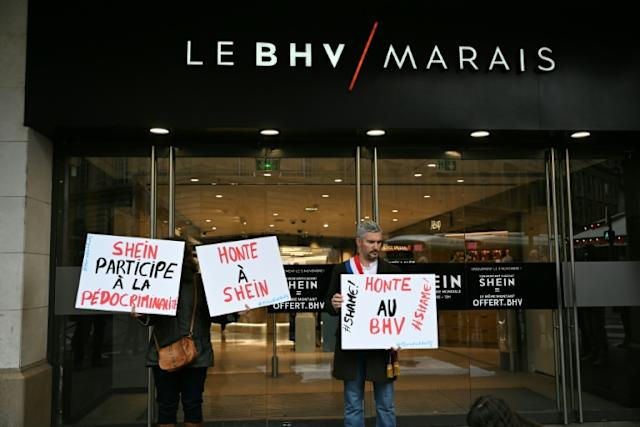
When Parisian department store BHV, part of the Galeries Lafayette group, announced a partnership with Shein, many shrugged. Cheap clothes at vast scale have long been tolerated, even as questions of ethics persist. But Disneyland Paris didn’t shrug. It withdrew from a planned Christmas collaboration with BHV, a pop-up Christmas boutique, effectively saying, “We don’t want our brand associated with this.”
That decision wasn’t just PR - it was brand custodianship in action. Disney and Galeries Lafayette calculated that reputational integrity outweighed short-term profit. In an industry driven by speed and scale, that choice was quietly radical.
The Power of Saying No
Shein’s growth model relies on volume and velocity, but the cracks are widening. The European Union’s new Extended Producer Responsibility laws require fashion brands to pay for clothing waste management. France has gone further, adding a €5 per-garment penalty - an existential threat to ultra-cheap models.

Retailers have long relied on consumer apathy: “What can you do?” But as governments, regulators, and brands like Disney act, the answer is clearer. Doing nothing is also a decision.
Doing Good as a Growth Strategy
Contrast that with Flashfood, a mobile app connecting shoppers with supermarkets to buy surplus or near-expiry food at a discount. Operating in more than 1,400 North American stores, Flashfood reduces waste, saves customers money, and gives retailers a halo of purpose without hurting profitability.
Closer to home, initiatives like SecondBite, KiwiHarvest, and supermarket donation programs reflect the same principle. Being good doesn’t have to mean being saintly. It can simply mean being smart, transparent, and aligned.
The BE GOOD Framework
Being good isn’t a campaign or a sustainability logo. It’s a mindset and a daily filter for decisions. Here’s a simple framework for retailers to test their “goodness quotient.”
B – Be Brave: Don’t sit on the fence. Customers value brands that take a stand, even if it’s controversial. Just ask Nala.
E – Examine Your Impact: Audit where your business helps or harms—suppliers, packaging, energy, and internal culture.
G – Ground It in Purpose: Doing good for optics rarely lasts. Anchor your actions in what truly matters to your brand and customers.
O – Own Your Decisions: Westpac’s WFH saga shows that even internal choices carry reputational weight. Transparency matters.
O – Offer Real Action: Flashfood and ECA show that talk is cheap without tangible systems and results.
D – Do It Consistently: Disney’s refusal to partner with Shein was consistent with decades of brand guardianship. Consistency is credibility.
The Retail Bottom Line
Customers still buy with their hearts before their wallets, but only when that trust is earned. Doing good might not deliver the fastest return, but it is the most sustainable strategy for resilience.
Next time you make a call on product, partnerships, or policy, ask: Does this do good for our brand, our people, and our planet?
If the answer is yes to at least two, you’re already on the right path.


Comments